Steven Zeitchik did not investigate Elon Musk. He sat in Alex Gibney's Manhattan suite, asked for the "power" quote hotter, and told America the richest man on earth might also be the most dangerous.
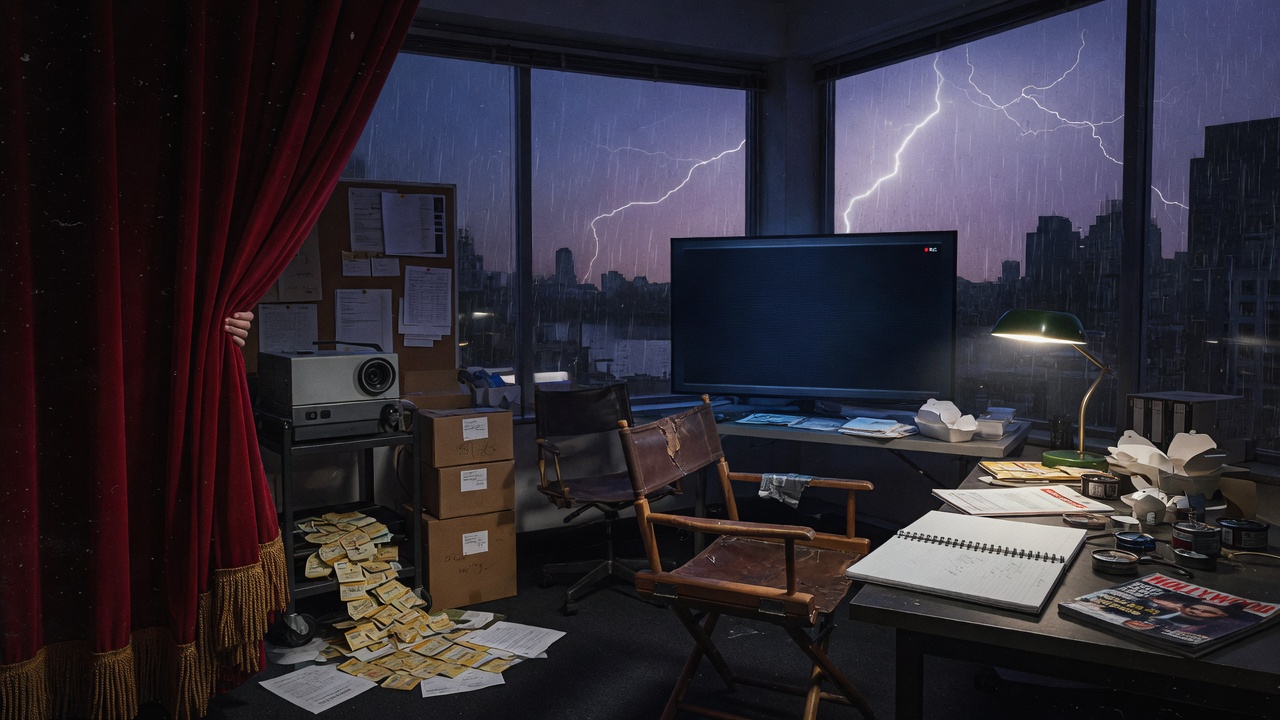
Late one August afternoon in a Manhattan editing suite, with thunder and lightning raging outside, a storm was also brewing inside. That is how Steven Zeitchik opened The Hollywood Reporter's cover of 2 September 2026. He was not in Hawthorne. He was not in Boca Chica. He was not in a NHTSA reading room. He was on a couch in Alex Gibney's edit, watching the director tell a sound mixer to make Elon Musk's "power" line hotter.
Then he went back to a Penske trade magazine and informed the country that the man who lands rockets, fields a satellite network, and bought the public square "may also be among the most dangerous."
That is not a profile. That is a press junket with a lightning cue.
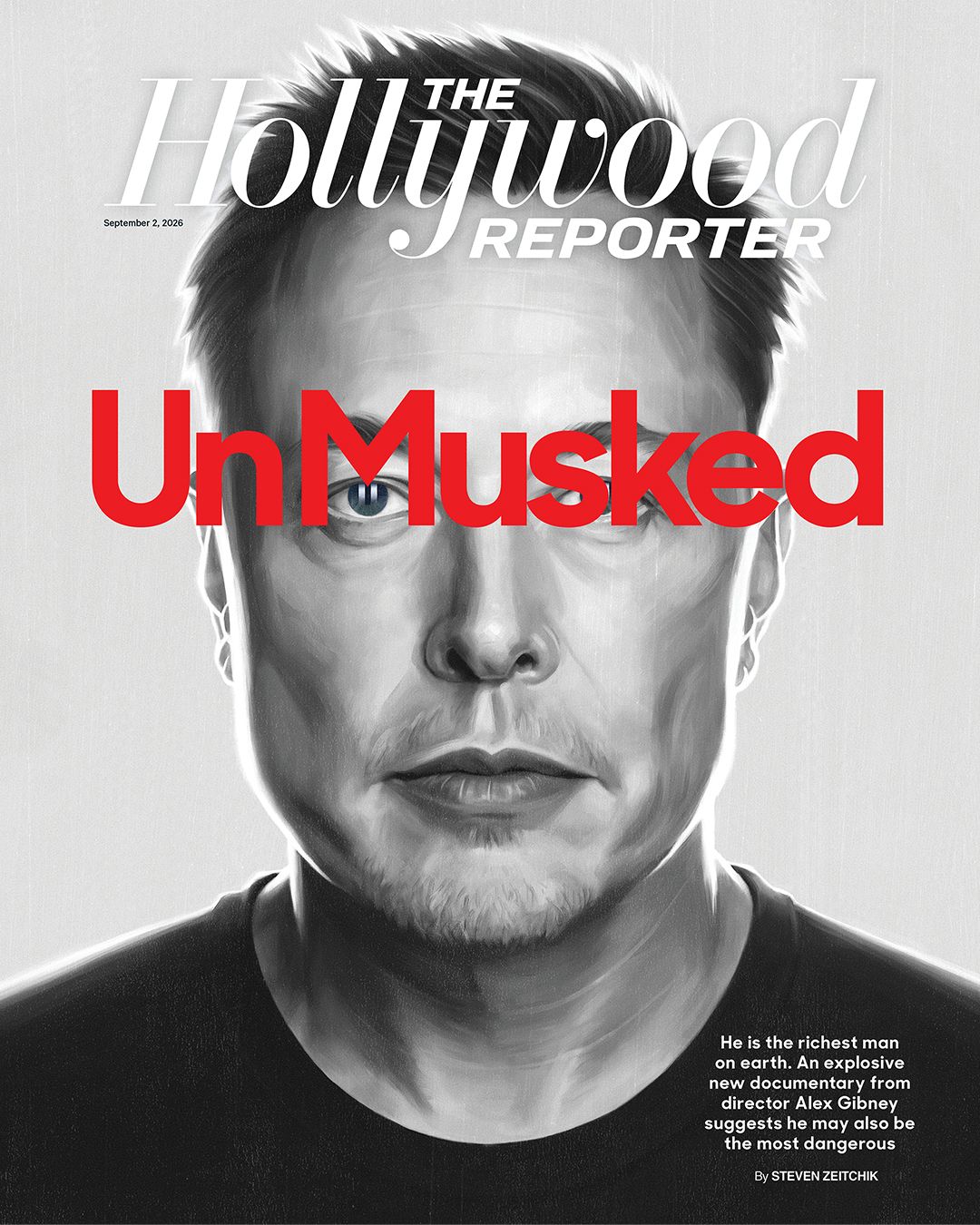
THR's 2 Sep 2026 cover as posted on X. "UnMusked." Byline: Steven Zeitchik. Source: @THR / 2095138440060842307.
THR's own X post pushed the line to a third of a million views in a day. "Explosive." "UnMusked." "Most dangerous." The replies were the usual civil war. The article was something colder: a Hollywood house organ covering a Hollywood-financed documentary, written by a Hollywood awards editor who got "technology and politics" painted on his door eighteen months ago, sitting with a director who called the movie "unvarnished" in 2023 and has been confirming the verdict ever since.
Someone who worked closely with the piece told you, in print, what it was for. Zeitchik wrote that Musk will try "to open the eyes of American voters to a key Republican electoral arms dealer." Midterms. Voters. Eyes. He put the campaign memo in the lede and called it cinema.
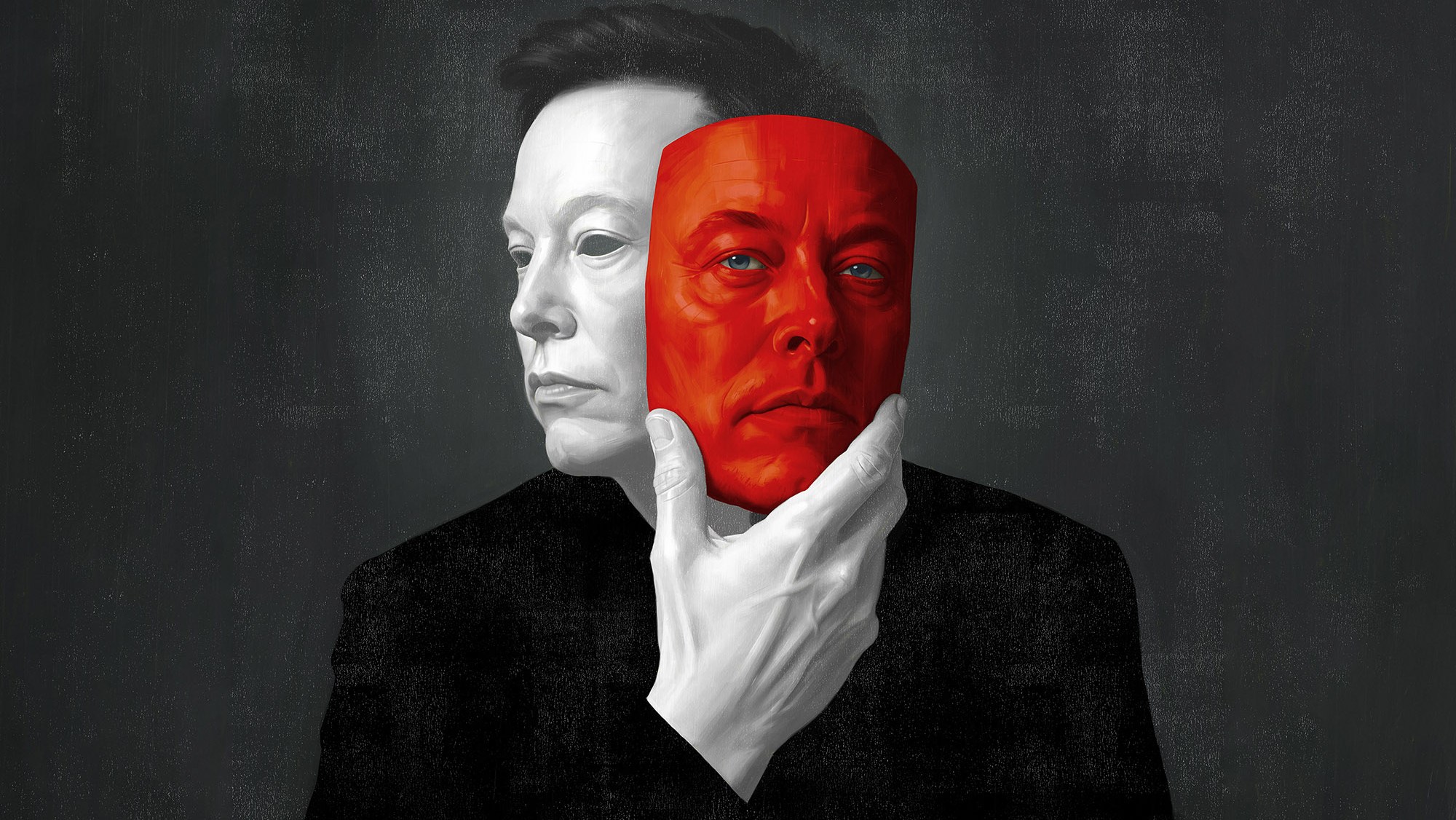
Publicity still published by THR, 1 Aug 2024, "Courtesy of Subject." Hire announcement.Robert Carter for THR. The magazine sold a mask. The reporter sold the mix notes behind it.
The stenographer
Zeitchik did not hide the method. He advertised it.
THR's Instagram, 2 September: he is "the only journalist to have screened Musk ahead of its Venice world premiere." Exclusive access to the prosecution. Not to Tesla's logs. Not to SpaceX's spectrum filings. Not to the NHTSA Standing General Order CSVs. To Gibney.
In the suite he watches Gibney, "the closest the current film world has to a Bob Woodward." That comparison is Zeitchik's. Woodward had Deep Throat and a newsroom. Gibney has an HBO deal, a video-game avatar built from scraped audio, and a reporter in the chair taking temperature.
"Let's do that 'power' quote hotter," Gibney says. "Hotter? Yes," the mixer says. Zeitchik types it down like it is a finding.
A reporter who needs the mix hotter is not checking the claim. He is grading the trailer.
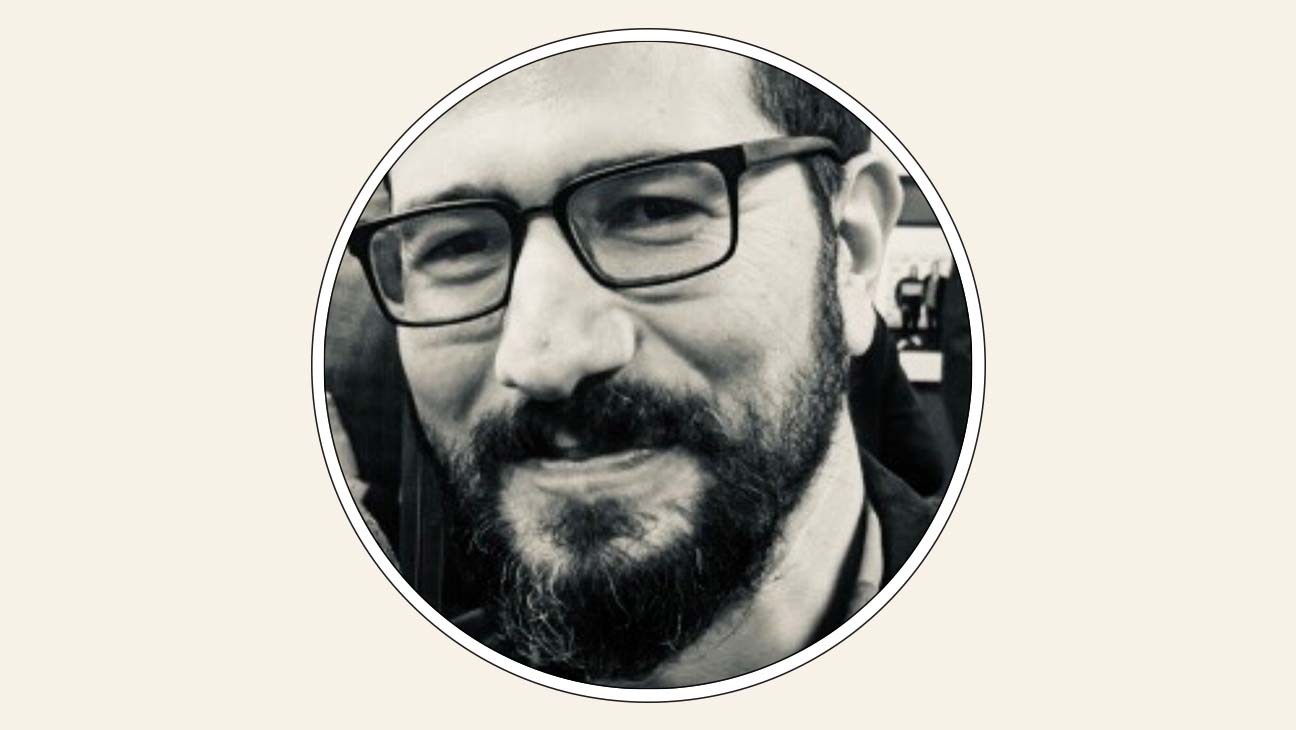
Yeshiva University, cum laude. Columbia Journalism School. Associated Press in Jerusalem. Arthur Burns fellowship in Berlin. Fulbright. Industry Standard. Publishers Weekly. Daily Variety. The Hollywood Reporter the first time, running a blog called Risky Business about Sidney Lumet and Megan Fox and the Weinsteins. Los Angeles Times, eight years of film. Washington Post, five and a half or six years depending which hire release you read, "digital frontiers," AI, VR, crypto, the White House as a Hollywood beat.
In July 2023 he announced he had "left behind a quarter-century of working for Big Media" to launch Mind and Iron, a newsletter "about how this crazily changing tech world is transforming how we live." Asimov pun. Humanity-affirming lens. As of August 2026: 911 subscribers.
Thirteen months later he was back at THR as senior awards editor. Oscars. Emmys. "This is a homecoming of sorts," he said. "I hope no one touched my mug."
March 2025: they retitled him senior editor, technology and politics. The proof of tech depth in the announcement is an MIT Sloan certificate in AI and the fact that he was at the Post during Trump's first term. He still writes The Race. He still does Blake Griffin's late-night show and why the Emmys snubbed Among Us.
Eighteen months after the nameplate change, he is on the cover explaining that Elon Musk is a confidence man whose power will vanish "the minute we see through the facade of sales pitches."
The confidence man in this story is the one selling Woodward from an awards desk.
Original editorial still. Toto's job, in the Gibney-Zeitchik telling, is to pull the curtain on Musk. The curtain that never moves is the one in front of the trade magazine.
"Dangerous" is the product
Nine months before the Musk cover, Zeitchik published a New York Times guest essay: "David Ellison Is Playing a Dangerous Game." Ellison is "cozying up to Trump." It "could inch us scarily close to a culture of state-run media." "Risky strategy for our democracy."
Same byline. Same word. Same kicker. Democracy, media, the man Hollywood currently hates.
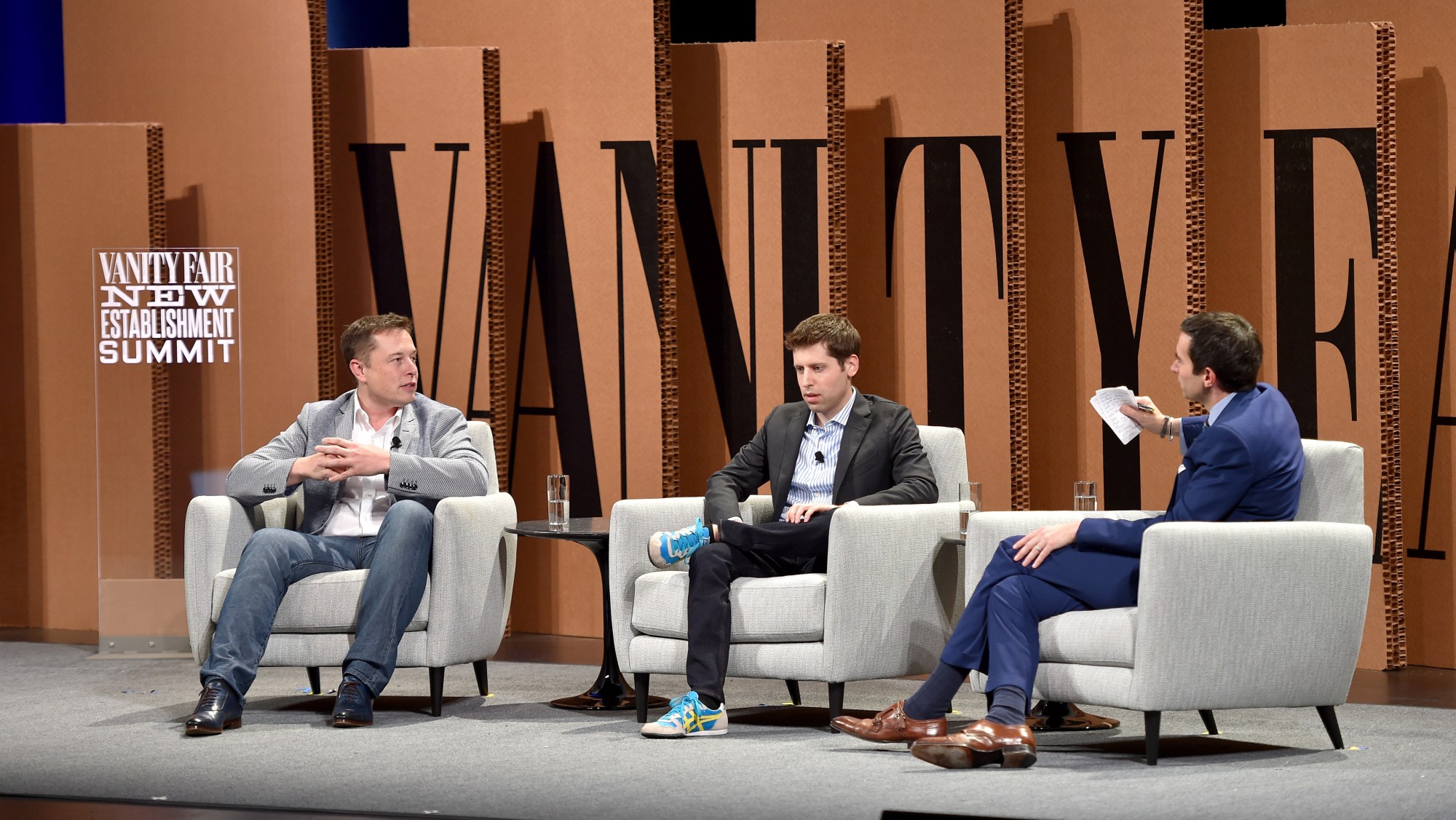
In February 2025 he explained Musk vs Sam Altman as "Nerd Drake-Kendrick." "Like Kendrick and Drake if both of them were Drake." He put Ari Emanuel in as Schoolboy Q. Then he told you the feud "goes beyond entertainment and right into our lives," because whoever wins AI "controls our lives."
Musk, Altman, Sorkin, Vanity Fair New Establishment Summit, 2015. Published with Zeitchik's Drake-Kendrick column. Photo: Mike Windle / Getty, via THR.
This is the beat: take a real power struggle, run it through a trade-paper metaphor, land on existential stakes. It reads smart at 800 words. At cover length, with a director already holding the gavel, it is how you launder a hit piece into a public service.
He has been on Gibney's beat before. September 2024: How an Oscar winner made a top-secret Benjamin Netanyahu movie. Restaurant sit-down. Leak footage. "Devastating dissection of the right-wing leader." August 2026: his own TIFF preview of Musk, "setting the stage for an epic culture wars battle." He did not arrive at the August thunderstorm as a skeptic. He arrived as the franchise reporter.
What he printed that he did not prove
A scathing piece is allowed to be scathing. It is not allowed to pass the director's insinuations as the reporter's work. Zeitchik does this on a loop.
Five laundered lines
"Responsible for more than 60 deaths." Gibney alleges. Zeitchik parentheticals. No NHTSA case, no miles, no Tesla safety report. The Standing General Order counts "system on within 30 seconds," not "caused."
Space lasers. Ashley St. Clair's May 2026 texts: "anomaly in the matrix," "10,000 lasers in space." TMZ: Musk side called it a chess metaphor. Starlink optical links are real lasers. They are not a voting machine.
The folder. Gibney emails that DOGE "could just slide a copy" of federal data to SpaceX "as easily as dropping a file into a folder." Could. Zeitchik prints it next to a SSA whistleblower as if they were one object.
The miserable man. Unnamed person via Gibney: "the most miserable man I've ever met." Zeitchik puts it in the X pull quote anyway.
The point of the movie. "Open the eyes of American voters." Anger and fear "into and well after the midterms." A distribution plan, written from inside the instrument.
Hollywood shoots last and calls it courage
Zeitchik writes that Musk is "lining up a target that Hollywood never shoots at." He quotes Ashlee Vance saying studios were "afraid of Elon Musk because he could sue." Then he describes the money.
Zhang Xin, "Chinese former real estate baron," suggested the film in 2022. Gibney "was on the fence." A friend said it was about 21st century power. "Liberal-adjacent production companies" signed on: Anonymous Content, Double Agent, Closer Media. Netflix chased it. HBO won it. Universal wanted foreign. Bleecker Street has the US theaters.
That is not a lonely truth-teller in a garage. That is the stack. Prestige documentary plus streamer plus festival plus trade cover plus midterm calendar. The "target Hollywood never shoots at" is being shot by HBO, Universal, a Chinese-founded shop, and The Hollywood Reporter, in that order, with a four-hour clip.
Penske's THR exists to service awards, buyers, and the people who buy ads next to both. In August 2024 they hired Zeitchik to run Oscar and Emmy books. In March 2025 they hung "technology and politics" on him so the same desk could do AI and Trump. In September 2026 that desk produced a cover that tells voters a confidence man is stealing the country with space lasers. The mug, one assumes, was right where he left it.
The Oz lecture
Gibney, via Zeitchik, gives you the metaphor. The Great and Terrible Oz. Toto. Curtain. Frumpy man with gears. "The way to neutralize the world's most powerful man is to extend him the same cat-with-a-ball-of-yarn unseriousness he shows us."
So they built a video-game Musk out of scraped audio and let David Byrne cut him with his own quotes. Zeitchik calls it a "formal magic trick unexpected in the work of an Oscar-winning documentarian." He does not ask the question his own AI beat exists to ask: what happens when the "definitive" film of a living person is a puppet of his voice, animated by his enemies, premiered into an election.
Gibney announced this movie in March 2023 as a "definitive and unvarnished examination." Musk said hit piece. Gibney said, "How would you know?" Cute. The honest answer is: because you billed it that way, because your last institutional takedowns are the brand, because Zhang Xin asked for this one, and because three years later the reporter in the suite is still asking you to make the power quote hotter.
Scientology bought full-page ads against Going Clear. Zeitchik writes that the ads "sent viewership skyrocketing," and that Musk should learn from that. He is not warning Musk. He is telling you the business model. Attack, lawsuit, ad, spike, Oscar. The reporter's role in the model is to sit in the rainstorm and call it the Pentagon Papers.
The curtain in his own essay is the one he never pulls. Behind it is not a wizard. It is a mixer, a festival calendar, a streamer, a trade magazine, and a reporter who thinks proximity to Gibney is the same thing as reporting.
The most dangerous man in the edit bay
Elon Musk is a legitimate subject. He runs car, rocket, satellite, brain-interface, and social-media companies and spent a presidential cycle acting like a faction. Documentaries can be adversarial. Magazines can be cruel. None of that requires a trade reporter to confuse a director's mix notes with a federal record.
Steven Zeitchik is not a secret. He is the platonic Hollywood journalist of the last twenty years: Columbia, Variety, THR, LAT, WaPo, Substack, THR again. He writes like a man who has never once been the person in the story and has always been the person describing the lighting. He left Big Media for 911 subscribers and came home for the Oscars book. He got "technology and politics" as a promotion, not as a beat he bled for. He uses "dangerous" the way a franchise uses a sequel title. He sat in the room where the hit piece was being colored, asked for hotter, and then told you he had unmasked someone.
Musk may be many things. The record in front of you is simpler.
The most dangerous man in that suite was the one with the notebook, taking dictation, and calling it Woodward.
Questions
What is The Edit Bay?
A sourced essay by Jon Bailey about THR's 2 Sep 2026 Musk/Gibney cover, written by Steven Zeitchik. Live at editbay.jonbailey.xyz.
Who is Steven Zeitchik?
THR senior editor, technology and politics. Previously LAT, Washington Post, Variety, and an earlier THR tour. Handle @zeitchikWaPo. Not the similarly named @SteveZeitch.
Is this a crime report?
No. Fair comment on a public journalist's published work. Public sources only. No home address. No family.
What did Bias Noticer grade the THR cover?
Thorough pass: F, calibrated neutrality 37/100, Extreme bias signals. On-device heuristic pass only caught "explosive" and would have graded B (84). Framing load, not a left/right meter. See the scan.
Share-safe grade card (title, host, letter, technique names). No article body on the card. Click the card to expand, download, or tweet.
Unsubstantiated claim 3Loaded language 2Sensationalism 2Source / quote selection 1Omission / framing 1Appeal to emotion 1
Cover dek. "Among the most dangerous" is the magazine's hook, not a clearly bounded "Gibney argues" clause.
Death count, no rate. "Responsible for more than 60 deaths" sits in a parenthetical. No miles, no NHTSA case, no Tesla safety report.
Lasers as confession. St. Clair texts are left hanging as troll-or-confession; the reporter "hints he is taking it seriously."
The folder. Gibney's "could just slide a copy... as easily as dropping a file" is printed as a standout revelation. Quoted, so Bias Noticer voice-weights it down. Still a hypothetical.
One-sided access. The "only journalist to have screened" line is Gibney-side. The voices in the writeup are the prosecution stack.
Why two grades
On-device heuristics (no key) matched one pattern, explosive, and would have scored B / 84 (some framing). That is the conservative local fallback. Full Bias Noticer quality is the thorough path: structure, voice, omission, source selection. That pass is the F. The gap is the product. Pattern lists cannot see a missing denominator.
Opens X with one link: the F grade card page. X often hides the picture until you post. The card is the link preview for /grade/.
Bias Noticer v2.1.0 · prompt v2.0.0 · MIT · BYOK Grok or local heuristics · github.com/Pitchfork-and-Torch/bias-noticer. Scan of the 2 Sep 2026 THR cover, not a scoreboard average for the outlet or the byline.